0.050.09975

Seminar: Breakage of Underground Infrastructure: What are the Associated Socio-Economic Costs? What are the Risks for Workers?

CIRANO

Friday 5 Apr 2019
From 11AM To 1PM

Today, lack of knowledge of the precise location of underground infrastructure networks (telecommunications, electricity, gas, water ...) as well as poor excavation techniques lead to many accidents when working near these networks.

In Quebec, there are more than 5 broken underground infrastructures on average per day (44% of which involve natural gas or electricity). While the costs of repairing a network are relatively easy to identify, indirect costs are difficult to quantify and rarely taken into account in work or prevention decisions. The seminar thus proposes an evaluation of all indirect costs (service interruption, congestion, intervention of emergency services, delay in the work, loss of reputation, etc.).

In addition, these infrastructure failures endanger workers by exposing them to serious injuries and sometimes life-threatening situations. The seminar identified the risks to which workers are exposed in the event of breakage of underground pipes and the factors that increase the likelihood that these risks will occur. In fact, it is important to better understand the risks in order to better adapt awareness-raising efforts and better target prevention measures for workers.
 

Consult the executive summary of the report "Identifying Occupational Health And Safety Risks Related To Damages To Underground Infrastructures"

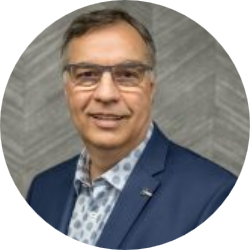
Denis Courchesne

President and CEO, Info Excavation

[ - ]
[ + ]

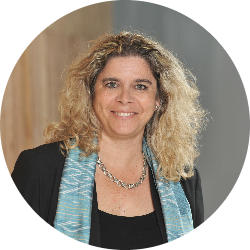
Nathalie De Marcellis-Warin

Nathalie de Marcellis-Warin joined CIRANO in 2000 as a postdoctoral researcher and was appointed President and CEO in 2016, after serving as Vice-President from 2008 to 2016. Since 2011, she has led the CIRANO Barometer project on risk perception in Quebec, which annually collects data on Quebecers’ concerns regarding 47 major societal issues. She is also Head of the CIRANO Research Pole on the Socioeconomic Impacts of Digital Intelligence and Principal Investigator of the Innovation and Digital Transformation research theme.

She is a Full Professor in the Department of Mathematics and Industrial Engineering at Polytechnique Montréal, where she also serves as Academic Director of PolyFinances. In addition, she is a Visiting Scientist at the Harvard T.H. Chan School of Public Health and an Associate Researcher at the Institute for Data Valorization (IVADO).

She holds a PhD in Management Science (specializing in risk management and insurance) from the École normale supérieure de Cachan. Her research focuses on risk management and decision-making in contexts of risk and uncertainty, as well as the design and evaluation of public policies. Her work combines economic analysis, cost-benefit analysis, survey data analysis, and more recently, large-scale unstructured data analytics.

In 2008, she founded the RISQH network, a knowledge-sharing and awareness network dedicated to risk management, patient safety, and quality of care in healthcare institutions. She contributed to the development of the Montreal Declaration for a Responsible Development of Artificial Intelligence.

She serves as Scientific Director of the Measurement Tools, Monitoring and Surveys Division at the International Observatory on the Societal Impacts of AI and Digital Technologies (OBVIA). She is also co-founder of the International Francophone Network on Scientific Advice (RFICS).

At CIRANO, she leads and contributes to several large-scale research initiatives, notably the creation of an economic digital twin of the St. Lawrence–Great Lakes region (GVCdtLab), developed in collaboration with the federal government.

She has published numerous scientific articles, several books, and more than 40 reports for government and other organizations. She has delivered over one hundred conferences and is regularly invited to speak in the media.

[ - ]
[ + ]

Ingrid Peignier

Ingrid Peignier is Senior Director of Partnerships and Research Valorization and Projects Director at CIRANO.

A graduate engineer from École des Mines d'Alès (EMA) and holder of a master's degree in industrial engineering from Polytechnique Montréal, her fields of expertise mainly involve the identification, evaluation, management and communication of risks in various fields such as the transportation of hazardous materials and underground infrastructure failures.

[ - ]
[ + ]

Program

11:00 - 11:15
Registration
11:15 - 11:20
Welcoming Remarks
11:20 - 11:35
Context in Quebec
Denis Courchesne
11:35 - 12:15
Presentation of the two CIRANO studies
12:15 - 13:00
Networking Lunch

Location


1130 Rue Sherbrooke O #1400, Montréal, QC H3A 2M8, Canada